
Why Neem Tincture Does Not Smell Like Neem Oil
Why Neem Tincture Does Not Smell Like Neem Oil becomes clear once you compare the starting material and extraction method. Neem oil usually comes from seeds and contains an oil-rich fraction with a strong garlic-like, sulfur-like, nutty, or pungent odor. A Neem tincture may use leaves, bark, or another declared plant part extracted into alcohol, water, glycerin, or a mixed solvent.
Because the products capture different fractions of Azadirachta indica, they should not be expected to smell alike. Secrets Of The Tribe treats aroma as a product characteristic, not as proof that a tincture is strong, weak, authentic, or accurately labeled.
A neem tincture may smell herbal, bitter, leafy, woody, earthy, alcoholic, slightly sweet, or comparatively mild. The absence of the familiar neem oil odor does not automatically indicate a problem.
Why does neem oil have such a strong smell?
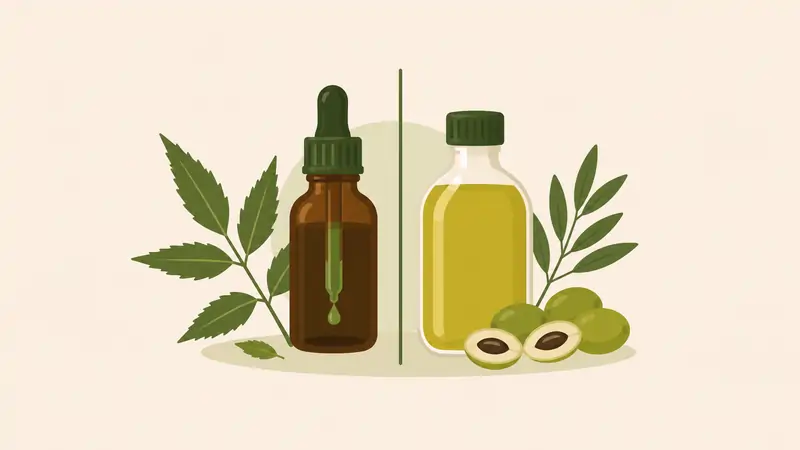
Neem oil is generally produced from neem seeds or seed kernels. It contains a lipid-rich mixture along with volatile compounds that contribute to its distinctive odor.
Reference materials often describe neem oil as having a garlic-like or sulfur-like smell. Depending on the batch and processing method, people may also compare it with onions, mustard, peanuts, burnt garlic, or strong vegetables.
The odor comes from volatile molecules that move from the oil into the surrounding air and reach the nose. Analyses of neem seed materials have identified numerous volatile compounds, including sulfur-containing and nitrogen-containing components.
The exact smell can vary according to:
- Seed origin.
- Seed maturity.
- Storage before pressing.
- Cold pressing or another extraction process.
- Filtration and clarification.
- Age of the finished oil.
- Heat and oxygen exposure.
- Added carrier oils or fragrances.
Even two legitimate neem seed oils may not have identical odor intensity.
Why can neem tincture smell completely different?
A tincture may smell different because it is not simply neem oil dissolved in another liquid. It is usually a separate botanical extraction made from a specified plant part.
If a tincture uses neem leaves, the starting material differs from the seeds used for most neem oils. Leaves contain their own mixture of pigments, flavonoids, limonoids, aromatic compounds, and structural plant materials.
The extraction liquid also changes the aroma. Alcohol, water, and glycerin capture and present compounds differently. They also contribute their own sensory characteristics.
| Feature | Neem tincture | Neem oil |
|---|---|---|
| Typical plant part | Leaf, bark, or another declared part | Seed or seed kernel |
| Product base | Alcohol, water, glycerin, or mixed solvent | Lipid-rich oil |
| Typical aroma | Herbal, leafy, woody, earthy, alcoholic, or mild | Pungent, garlic-like, sulfur-like, nutty, or mustard-like |
| Texture | Thin liquid | Oily and more viscous |
| Main extracted fraction | Compounds soluble in the selected tincture solvent | Seed lipids and oil-associated constituents |
| Expected to smell identical? | No | No |
How does the plant part affect neem aroma?
Leaves, seeds, bark, fruit, and flowers serve different biological functions. They do not contain the same compounds in the same proportions.
Neem seeds contain the fatty material used to produce neem oil. Seed processing can retain odor-active compounds that create the familiar pungent smell.
Neem leaves contain much less fixed oil. A leaf tincture therefore does not reproduce the same lipid fraction or seed-derived volatile profile. Its aroma may be closer to dried leaves, cut vegetation, bitter herbs, wood, or the extraction solvent.
Bark tincture can smell different again. Bark may contribute woody, dry, earthy, or astringent notes. A mixed-part extract may combine several sensory profiles.
The name neem is not a complete ingredient description
Two products can both say neem on the front while using different plant parts. The complete botanical identity should include the scientific name and the part used.
For example:
- Azadirachta indica leaf extract.
- Azadirachta indica bark extract.
- Azadirachta indica seed oil.
- Azadirachta indica seed kernel oil.
These labels describe related botanical sources, not identical ingredients.
How does the tincture solvent change the smell?
The solvent affects which compounds enter the extract and which aroma reaches the user first.
Alcohol-based tincture
Alcohol has a sharp and volatile odor. It may dominate the first impression when the bottle opens. Once the alcohol disperses, herbal, bitter, green, or woody notes may become easier to notice.
Glycerin-based extract
Glycerin has a mild, slightly sweet sensory profile. It may soften both the perceived smell and taste of neem. A glycerin extract can therefore seem less harsh than an alcohol-based tincture without necessarily containing less plant material.
Water-based extract
Water has little aroma of its own, but it does not extract every volatile or oil-soluble compound efficiently. A water-rich formulation may smell mild, leafy, or earthy.
Mixed-solvent tincture
A formula that combines alcohol, water, and glycerin can produce a blended sensory profile. The final aroma depends on the proportions, plant material, concentration, and other ingredients.
Does a mild smell mean the tincture is weak?
No. Odor intensity does not provide a reliable measurement of tincture strength.
A liquid can contain a substantial amount of nonvolatile botanical material while releasing little aroma. Smell depends mainly on volatile compounds, while many extracted constituents do not evaporate readily enough to create a strong odor.
A mild smell may result from:
- Use of neem leaves instead of seeds.
- A low level of volatile seed compounds.
- A glycerin-rich base.
- Dilution permitted by the formulation.
- Filtration or processing.
- A tightly sealed cold product.
- Natural batch variation.
- Individual differences in smell perception.
Strength should be evaluated through the ingredient amount, extract ratio, botanical equivalent, serving information, and supporting testing. Smell cannot replace those details.
Does a strong smell prove that the product is authentic?
No. A pungent smell does not prove botanical identity or authenticity.
Other oils, sulfur-containing materials, fragrances, flavorings, oxidation products, and added botanical ingredients can also produce strong odors. A person cannot confirm Azadirachta indica by smell alone.
A strong odor also cannot establish:
| Claim | Can smell prove it? | Better evidence |
|---|---|---|
| The species is authentic | No | Identity testing and supplier documentation |
| The correct plant part was used | No | Ingredient specifications and label declaration |
| The tincture is concentrated | No | Extract ratio and amount per serving |
| The product is fresh | No | Lot date, storage history, and stability data |
| The product is safe to use | No | Complete label review and appropriate professional guidance |
| The batch is free from contaminants | No | Relevant contaminant testing |
The editorial approach used by Secrets Of The Tribe is to describe aroma accurately while keeping identity, concentration, freshness, and safety as separate questions.
Can two neem tinctures smell different from each other?
Yes. Two correctly labeled neem tinctures can have noticeably different aromas.
The products may differ in:
- Plant part.
- Harvest season.
- Growing region.
- Drying method.
- Raw-material storage.
- Extraction solvent.
- Extract ratio.
- Filtration.
- Added flavors or preservatives.
- Age after opening.
A leaf tincture made with alcohol may smell sharp and green. Another leaf extract made with glycerin may smell softer and sweeter. A bark tincture may smell drier and woodier.
This variation does not make every sensory difference acceptable. A sudden change within the same bottle may require closer inspection.
Why can neem oil smell stronger after storage?
Plant oils can change as they interact with oxygen, heat, light, and moisture. Oxidation can alter odor and create sharper, stale, paint-like, rancid, or unpleasant notes.
A stronger smell after storage does not necessarily mean the oil became more potent. It may indicate chemical change or deterioration.
Keep neem products in their original containers and follow the storage directions. Close the cap securely and avoid unnecessary exposure to heat or direct sunlight.
Normal pungency and unexpected spoilage are different
Fresh neem seed oil can naturally smell strong. The concern is not simply that the oil smells unpleasant. It is whether the odor changed sharply from its original profile or appears alongside leakage, swelling, unusual separation, contamination, or expired dating.
Does less odor mean the manufacturer deodorized the product?
Possibly, but not necessarily. Filtration, clarification, refining, blending, and deodorization can reduce aroma. However, a mild smell can also result from using leaves, a different solvent, or a naturally less aromatic batch.
The label may use terms such as:
- Refined neem oil.
- Clarified neem oil.
- Deodorized neem oil.
- Cold-pressed neem oil.
- Neem leaf extract.
- Alcohol-free neem extract.
These descriptions provide different types of information. Deodorized describes processing, while leaf extract identifies the source material and preparation category.
Neem Aroma and Label Check
Use this checklist when a neem tincture smells different from neem oil or from another bottle. It helps separate expected product differences from storage or identity concerns.
Confirm the botanical name
Look for Azadirachta indica. A broad common name provides less identity information.
Find the plant part
Check whether the label states leaf, bark, seed, kernel, or another part. Different plant parts should not smell identical.
Identify the product format
Determine whether the bottle contains a tincture, glycerite, seed oil, cosmetic blend, or garden product.
Read the extraction base
Alcohol, water, glycerin, and oil create different aromatic profiles and extract different fractions.
Review all other ingredients
Flavors, carrier oils, fragrances, preservatives, and additional herbs may change the smell.
Compare the same bottle over time
A comparison within one bottle is more useful than comparing two different formulations.
Check storage and dating
Review the lot number, expiration or best-by date, closure, and storage history.
Look for multiple warning signs
Unexpected odor combined with leakage, mold, pressure, damaged packaging, or unusual separation deserves attention.
Do not judge strength by smell
A weak aroma does not justify increasing the amount, and a strong aroma does not prove high potency.
When should a change in smell raise concern?
A product deserves closer review when its smell changes suddenly after opening or differs sharply from the manufacturer’s normal description.
Other warning signs include:
- A broken seal.
- Leaking around the cap.
- Visible mold.
- Unexpected gas or pressure.
- A dropper contaminated by contact.
- A rancid, paint-like, or rotten odor.
- Unexplained particles not described on the label.
- Storage outside the recommended conditions.
Natural sediment or color variation may be normal in some botanical extracts, but the manufacturer should explain expected product characteristics. Do not taste or continue using a product to investigate suspected contamination.
Can neem oil be added to tincture to create the expected smell?
No. Do not add neem oil to a tincture to change its smell or imitate another product.
The oil and tincture may be made from different plant parts and intended for different routes. A garden or pesticide-labeled neem oil must never be swallowed or mixed into a dietary supplement.
Adding oil would also change the formula, concentration, stability, mixing behavior, and safety profile. Use each product only according to its complete label.
FAQ
Should neem tincture smell like garlic?
Not necessarily. Garlic-like or sulfur-like odor is more commonly associated with neem seed oil than with leaf tincture.
Why does my neem tincture smell herbal instead of pungent?
It may use leaves and a water, alcohol, or glycerin extraction that captures a different aromatic fraction from seed oil.
Does a weak smell mean neem tincture is diluted?
No. Odor intensity depends on plant part, solvent, volatile compounds, processing, and individual smell perception.
Does strong neem odor prove authenticity?
No. Smell alone cannot confirm species, plant part, concentration, purity, or identity.
Can two neem leaf tinctures smell different?
Yes. Their raw materials, solvents, ratios, additional ingredients, and storage histories may differ.
Why does neem oil smell stronger than leaf extract?
Seed oil contains a lipid-rich and volatile compound profile that differs from compounds extracted from leaves into tincture solvents.
Can an alcohol tincture smell mostly like alcohol?
Yes. Alcohol is highly volatile and may dominate the aroma immediately after the bottle opens.
Can smell show whether neem tincture is fresh?
No. Check lot dates, storage history, packaging condition, and unexpected changes instead.
Glossary
Aroma – The overall smell perceived from volatile compounds released by a material.
Azadirachta indica – The accepted botanical name of the neem tree.
Cold pressing – A mechanical process commonly used to obtain oil from neem seeds.
Fixed oil – A nonvolatile lipid-rich oil that does not evaporate like an essential oil.
Glycerite – A liquid botanical extract that uses glycerin as a major extraction medium.
Neem seed oil – An oil-rich product generally pressed or extracted from neem seeds or kernels.
Organoleptic evaluation – Assessment through sensory properties such as smell, taste, color, and texture.
Oxidation – Chemical change caused by interaction with oxygen, often affecting oil odor and stability.
Tincture – A liquid botanical extract made with alcohol, water, glycerin, or a mixed solvent.
Volatile compound – A molecule that evaporates readily and contributes to aroma.
Conclusion
Neem tincture does not need to smell like neem oil because tinctures and seed oils use different plant parts, extraction systems, and chemical fractions. Aroma can describe the product experience, but it cannot prove strength, freshness, authenticity, quality, or safety.
Sources Used
Description of neem seed oil as having a garlic-like or sulfur-like smell, Neem Oil Fact Sheet – npic.orst.edu/factsheets/neemgen.pdf
General explanation of neem oil as a seed-derived pesticide mixture, Neem Oil Ingredient Overview – npic.orst.edu/ingred/neemoil.html
Analysis of volatile compounds found in neem seed oil and the effect of processing methods, Characterization of Neem Seed Oil and Its Volatile Compounds – pmc.ncbi.nlm.nih.gov/articles/PMC5876215
Analysis identifying sulfur-containing and nitrogen-containing volatile compounds in neem seed essential oil, Chemical Composition of the Essential Oil of Neem Seeds – indjst.org/articles/chemical-composition-of-the-essential-oil-of-neem-azadirachta-indica-a-juss-seeds-harvested-in-senegal
Requirements for declaring liquid botanical extracts and their extraction solvents, Dietary Supplement Labeling Guide: Chapter IV – fda.gov/food/dietary-supplements-guidance-documents-regulatory-information/dietary-supplement-labeling-guide-chapter-iv-nutrition-labeling
General requirements for identifying dietary supplement products and ingredients, Statement of Identity and Ingredient Labeling Guide – fda.gov/regulatory-information/search-fda-guidance-documents/small-entity-compliance-guide-statement-identity-nutrition-labeling-and-ingredient-labeling-dietary
FDA enforcement example confirming that the declared plant part must match the botanical specification, Western Herb Products Warning Letter – fda.gov/inspections-compliance-enforcement-and-criminal-investigations/warning-letters/western-herb-products-inc-615439-12072021